

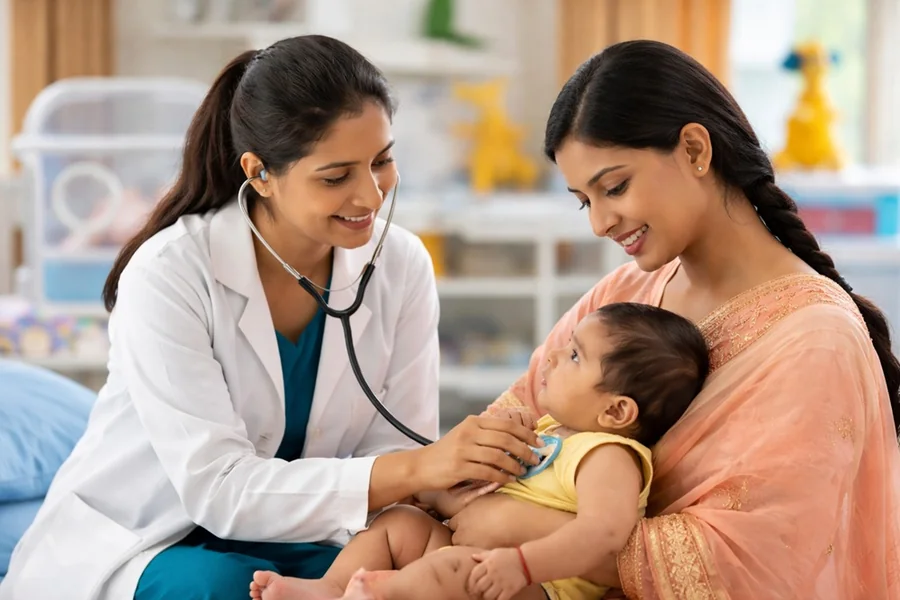
Healthcare for women and children has shifted from fragmented treatment paths to integrated clinical ecosystems. Instead of visiting separate facilities for reproductive care, pregnancy management, neonatal services, and pediatric follow-ups, families now increasingly depend on structured centers that align these specialties under one operational framework. This model improves continuity, reduces risk gaps, and supports faster decision-making across life stages.
Such integrated systems rely on coordinated obstetrics, gynecology, fetal medicine, neonatology, and pediatric departments working in sync. Clinical protocols are standardized, escalation pathways are defined, and multidisciplinary reviews are common practice. In these environments, a lady doctor gynecologist often becomes the first point of structured entry into long-term maternal and child care pathways.
Why Integrated Women and Child Care Models Are Expanding
Integrated women and child care models are expanding because maternal and pediatric health outcomes are tightly interconnected. Pregnancy risk factors influence neonatal health, and early childhood indicators often reflect prenatal and perinatal conditions. Treating these stages separately leads to missed context and delayed intervention.
Hospitals built around combined maternal and child care frameworks design their systems for continuity. Antenatal diagnostics, delivery support, neonatal intensive care, lactation guidance, and early pediatric monitoring are placed within one clinical chain. This structure reduces referral delays and improves data continuity.
Operationally, these models also allow better use of specialized equipment and trained teams. Fetal imaging, labor monitoring, neonatal resuscitation, and pediatric emergency response can be aligned within shared protocols. The result is a more predictable and safer clinical journey.
How Specialized Gynecology Services Fit Into the Model
Gynecology is no longer limited to routine reproductive health visits. It now includes minimally invasive procedures, high-risk pregnancy management, fertility evaluation, hormonal disorder treatment, and preventive screening programs. These expanded responsibilities require deeper specialization and collaborative oversight.
A special gynecologist typically operates within a layered support structure that includes fetal medicine experts, anesthetists, neonatologists, and critical care teams. This reduces procedural risk and improves outcome tracking. Clinical decisions are not isolated but reviewed through cross-functional input.
Such specialization also supports earlier detection of complications. Advanced imaging, laboratory integration, and risk scoring models allow earlier intervention. When embedded within a women and child-focused hospital model, these services connect directly with maternity and neonatal care without transition gaps.
Role of Preventive Screening in Women’s Health
Preventive screening has become central to modern gynecology practice. Structured screening programs include cervical health checks, breast assessments, hormonal profiling, and reproductive health evaluations. These are not episodic tests but part of longitudinal health monitoring.
When preventive programs are embedded into institutional care models, follow-up rates improve. Records are centralized, reminders are system-driven, and escalations are faster. This reduces the silent progression of disease and supports early-stage management strategies.
Preventive frameworks also enable patient education. Counseling on nutrition, reproductive planning, and metabolic health becomes part of standard consultation rather than optional advice.
Minimally Invasive and Day Care Procedures
Minimally invasive gynecological procedures have transformed recovery timelines and patient comfort. Techniques such as laparoscopy and hysteroscopy reduce hospital stay and lower complication rates. These methods require advanced surgical skill and high-quality operating infrastructure.
Within integrated hospitals, these procedures are supported by anesthesia teams and post-procedure monitoring units specialized for women’s health. Rapid discharge protocols are balanced with safety checkpoints. This ensures efficiency without compromising clinical oversight.
High Risk Pregnancy Management Systems
High-risk pregnancies require structured escalation pathways. Risk factors may include maternal age, metabolic disorders, fetal growth concerns, or prior obstetric complications. These cases benefit from protocol-driven monitoring rather than reactive care.
Integrated hospitals create dedicated high-risk clinics with multidisciplinary review boards. Obstetricians, fetal medicine experts, and neonatologists jointly assess progression. This shared model improves timing of intervention and delivery planning.
Continuous fetal monitoring, targeted imaging, and maternal parameter tracking become routine tools in such systems.
Pediatric Care Within the Same Clinical Ecosystem
Pediatric care integrated with maternal services ensures that newborn and child health monitoring begins immediately after birth. There is no transfer gap between the delivery room and pediatric supervision. Neonatal teams are present at high-risk deliveries and prepared for immediate intervention.
This ecosystem approach improves early diagnosis of respiratory distress, metabolic disorders, feeding issues, and congenital concerns. Structured newborn assessment protocols are applied consistently. Follow-up schedules are defined before discharge.
Vaccination tracking, developmental screening, and early nutrition counseling are built into pediatric pathways. This reduces fragmented care and improves adherence to clinical guidelines.
Neonatal Intensive and Transitional Care
Neonatal intensive care units are critical components of women’s and children’s hospitals. These units handle premature births, low birth weight infants, and babies requiring respiratory or metabolic support. Infrastructure includes incubators, ventilators, and continuous monitoring systems.
Transitional care bridges the gap between intensive care and discharge readiness. It focuses on feeding stability, temperature regulation, and parental training. Structured transition reduces readmission risk.
Early Childhood Development Monitoring
Modern pediatric models extend beyond illness treatment to developmental tracking. Growth charts, neurodevelopmental screening, and behavioral milestones are monitored systematically. Early detection enables early intervention.
Hospitals that specialize in maternal and child care often run structured developmental clinics. These focus on speech, motor skills, and cognitive markers. Referral pathways to therapy services are defined when needed.
Pediatric Emergency Readiness
Children present differently from adults in emergency settings. Specialized pediatric emergency readiness is therefore essential. Equipment sizing, medication dosing, and response protocols are customized.
Integrated hospitals train emergency teams specifically for pediatric scenarios. Simulation drills and protocol reviews are routine. This improves response speed and reduces treatment errors. Rapid triage and escalation systems ensure that critical pediatric cases receive immediate attention.
Final Thoughts on Structured Maternal and Pediatric Care
Integrated women and child care models are redefining how families experience medical support from pregnancy through early childhood. When obstetrics, gynecology, neonatology, and pediatrics operate within one coordinated framework, clinical continuity improves and risk gaps narrow. The presence of a qualified child specialist within the same institutional structure ensures that newborn and early childhood needs are addressed without delay.
Healthcare institutions focused exclusively on women and children, such as ANKURA HOSPITAL FOR WOMEN & CHILDREN, reflect this structured approach through dedicated maternal services, advanced gynecology care, neonatal support systems, and pediatric programs. Such focused models show how specialization, coordination, and purpose-driven clinical design can reshape care delivery across generations.
